
Industrial Chic Office Design: Exposed Elements and Raw Materials
The industrial aesthetic has come a long way from its warehouse-conversion roots. What started as a clever way to repurpose old factories has evolved into one of the most sought-after styles in contemporary office design. Today, industrial chic isn’t accidental — it’s a deliberate choice for businesses that want their workspace to feel bold, authentic and full of character.
There’s a reason this look resonates with modern organisations. Industrial design embraces transparency — quite literally. Exposed beams, visible services and raw materials reflect the values many businesses champion today: honesty, openness and authenticity. These spaces feel real and grounded, rather than overly polished or corporate.
It’s not just about looks, either. Industrial-style offices are incredibly adaptable. Open ceilings and flexible layouts make it easier to reconfigure spaces as teams grow and change. Raw materials like concrete, steel and timber are durable, practical and often cost-effective. The style is living proof that you don’t have to sacrifice impact for functionality.
At Urban Fitouts, we see industrial chic as far more than a passing trend. Done well, it’s a smart design strategy, one that balances striking aesthetics with practical, future-ready workplace performance.
What Is Industrial Chic Office Design?
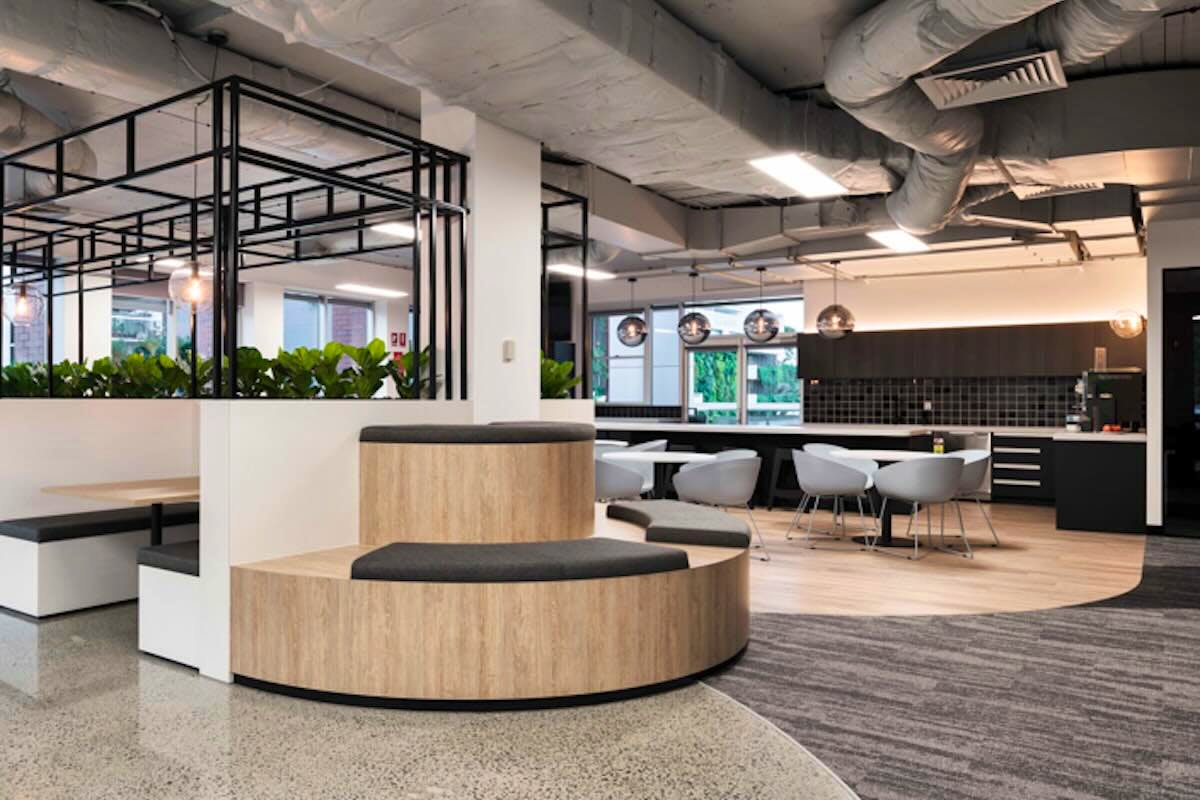
Industrial chic is all about celebrating what a building is really made of. Instead of hiding beams, ducts and brickwork behind pristine plasterboard and suspended ceilings, this approach brings them front and centre. Pipes become features. Concrete becomes character. Structure becomes style.
It’s design that doesn’t pretend. It proudly shows its workings and turns the building’s bones into part of the story.
Core characteristics include exposed structural elements (ceiling beams, HVAC ducts, pipework and brickwork), raw materials (polished concrete, steel, natural timber), neutral colour palettes, open-plan layouts with defined zones, and functional furniture with character.
The crucial element that separates successful industrial chic from unfinished spaces is curation. True industrial design is carefully considered and refined, balancing raw elements with sophisticated finishes, appropriate acoustics and employee comfort.
Exposed Elements: Turning Structure into a Feature
Exposed Ceilings and Services
Open ceilings with visible HVAC systems, electrical conduits and fire sprinklers represent the most defining feature of industrial office design. When properly coordinated, these functional elements create striking visual interest whilst delivering practical benefits.
Exposed ceiling systems increase perceived ceiling height dramatically, creating spaciousness particularly valuable in buildings with lower floor-to-floor heights. From a cost perspective, eliminating suspended ceilings delivers significant savings that can be redirected towards higher-quality finishes elsewhere.
However, acoustic considerations become critical. Hard surfaces reflect sound, potentially creating uncomfortable reverberation. Strategic placement of acoustic baffles, suspended panels and soft furnishings ensures industrial aesthetics don’t compromise workplace functionality.
Structural Steel and Concrete
Exposing structural steel beams and columns transforms necessary building elements into bold design statements. Polished or sealed concrete floors offer exceptional durability alongside distinctive aesthetics, withstanding heavy commercial use whilst requiring minimal maintenance.
Concrete feature walls provide textural interest and visual anchoring within open-plan environments, creating substantial backdrops that ground spaces and provide acoustic mass.
In commercial settings, fire rating and compliance remain paramount. Steel members often require intumescent coatings to maintain fire resistance whilst achieving desired aesthetics. Working with experienced fitout specialists ensures exposed elements meet all regulatory requirements.
Exposed Brick
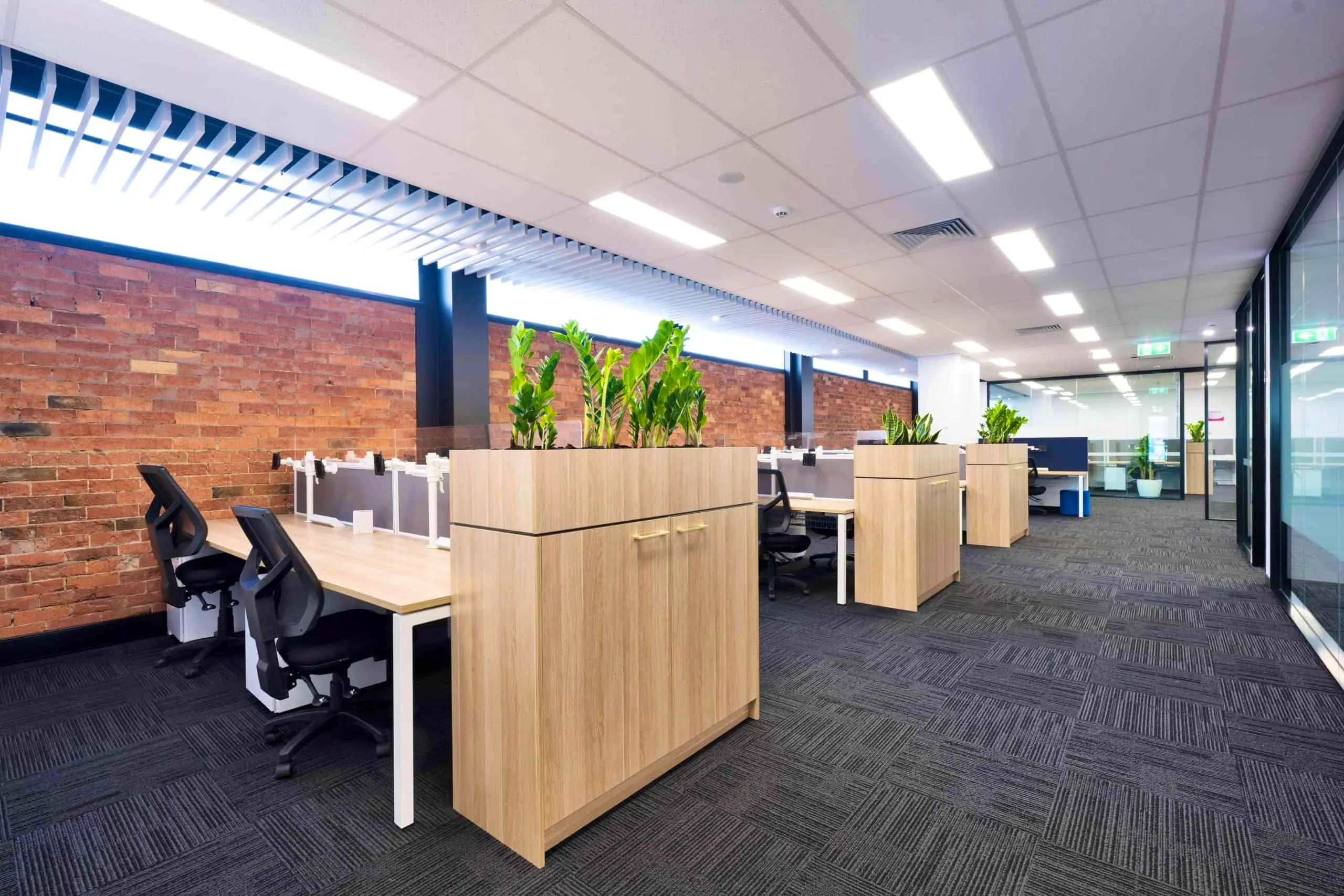
In heritage buildings, exposing original brickwork creates an immediate connection to a building’s history. Even in new builds, brick feature walls introduce authenticity and warmth that contrasts beautifully with contemporary steel and glass.
The textural quality of exposed brick adds depth that smooth walls cannot replicate. Surface irregularities create changing light and shadow patterns throughout the day, making spaces feel dynamic rather than static.
Raw Materials That Define the Look
Timber (Reclaimed and Natural)
Reclaimed timber is where industrial edge meets warmth and personality. Salvaged from old buildings and given a second life, it carries its own story. Every knot, mark and weathered grain adding character you simply can’t replicate. It’s also a smart sustainability choice, supporting circular economy principles while reducing demand for new materials.
Visually, timber works hard in an industrial space. Its natural warmth softens the coolness of concrete and steel, creating balance and preventing the office from feeling stark or clinical. Whether used for feature walls, joinery or statement tables, natural timber brings authenticity and depth, and only gets better with age as it develops a rich, lived-in patina.
Metal and Steel Accents
Blackened steel frames are a simple way to add structure and definition to a contemporary workplace. They create clean lines and subtle zoning without making the space feel boxed in. Crittall-style partitions — with their slim steel frames and generous glass panels — are especially popular, offering the best of both worlds: visual openness with the added benefit of acoustic separation.
Lighting is another opportunity to lean into the industrial character. Think exposed bulbs, metal shades and visible fittings that feel purposeful rather than decorative. These fixtures don’t just illuminate the space, they reinforce the aesthetic, adding personality and a touch of drama while still delivering practical, well-considered lighting where it’s needed most.
Glass and Transparency
Industrial-style glazing balances openness with necessary privacy. Large glass panels framed in steel create visual permeability whilst allowing areas to function independently, supporting collaborative culture by ensuring people remain visible and accessible.
High-performance acoustic glass and proper sealing ensure glass-intensive spaces function effectively whilst maintaining transparency and working in with the open-plan style layout that many Industrial chic offices strive for.
Industrial Chic Meets Modern Workplace Needs
Acoustics in Open Industrial Spaces
Hard surfaces in industrial environments create acoustic challenges that must be addressed. Acoustic panels and baffles provide essential sound absorption whilst complementing industrial aesthetics. Soft furnishings balance hard architectural surfaces, and zoning strategies separate noisy areas from quiet work zones.
Lighting Strategy
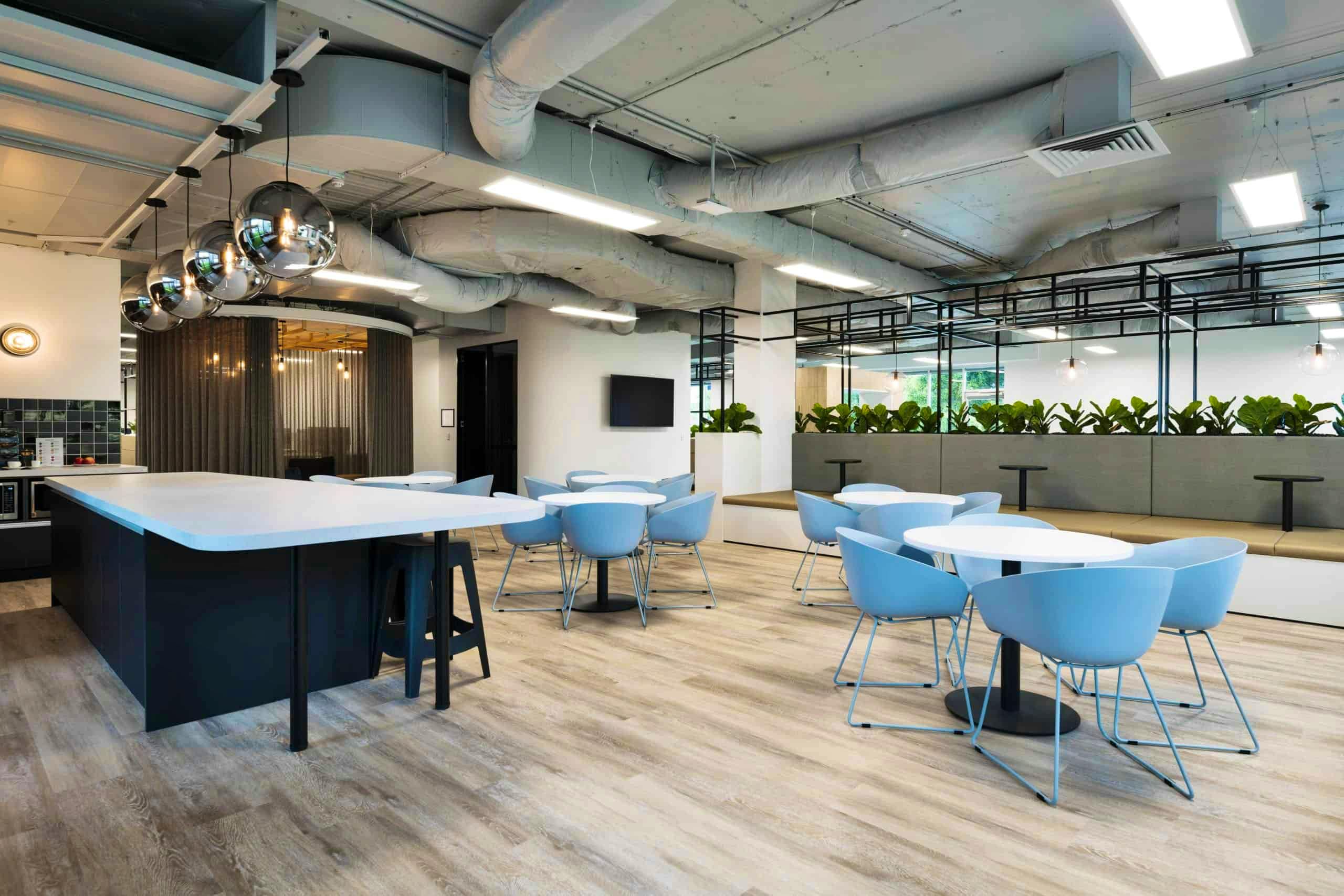
Industrial spaces demand sophisticated lighting that balances ambient illumination, task lighting and architectural drama. Statement pendants create sculptural elements whilst providing downlighting. Task lighting addresses specific functional needs, and maximising natural light through large windows and transparent partitions reduces reliance on artificial lighting.
Flexibility and Adaptability
Industrial design’s openness creates exceptional workplace flexibility. Modular furniture allows easy reconfiguration, movable partitions provide spatial definition without permanent commitment, and multi-use collaboration areas maximise utility whilst minimising dedicated single-purpose spaces.
Colour Palette and Styling
The industrial palette typically starts with neutral bases: charcoal grey, concrete tones, black steel, and white – allowing materials to speak for themselves. Accent colours provide brand integration opportunities, whilst greenery softens industrial edges and introduces biophilic benefits.
Artwork and branding elements personalise spaces, with industrial environments’ generous wall expanses creating ideal canvases for bold statements.
Sustainability and Industrial Design
Industrial chic aligns with sustainable design principles through honest materials and adaptive reuse. Reclaimed materials support circular economy principles, whilst the durability of concrete, steel and quality timber ensures long service lives with minimal maintenance.
Adaptive reuse of existing buildings preserves embodied carbon whilst creating distinctive environments. This approach aligns with ESG priorities increasingly important to modern businesses.
Is Industrial Chic Right for Your Business?
Industrial design is a natural fit for creative agencies, tech firms, architecture studios and forward-thinking businesses that want their workspace to reflect innovation and authenticity. The aesthetic makes a statement — it’s memorable, distinctive and full of personality — while still supporting the practical needs of modern teams, from collaboration zones to focused work areas.
It’s also a popular style for businesses wanting a strong urban edge; the kind of spaces where atmosphere is just as important as service. Barber shops, hair salons and tattoo studios often lean into industrial design because it feels authentic, creative and a little rebellious. Exposed brick, concrete floors and steel detailing create a backdrop that feels effortlessly cool and Instagram-worthy, while still being practical and hard-wearing.
Beyond personal services, the aesthetic works beautifully for cafés, boutique gyms, craft breweries, co-working hubs and retail showrooms. These environments benefit from the raw textures and open layouts industrial design provides, helping them feel energetic, social and connected to their surroundings. The style naturally encourages a sense of community and creativity — making it ideal for brands that want their space to feel vibrant, modern and unmistakably urban.
That said, industrial chic isn’t one-size-fits-all. In more traditional corporate environments, the look can be softened and refined. Adding upholstered furniture, layered textiles, area rugs and warmer lighting helps balance the raw elements and create a more polished feel. The result can range from bold, warehouse-inspired spaces to subtle industrial influences — proving the style is flexible enough to suit a wide spectrum of workplaces.
Bringing Industrial Chic to Life with Urban Fitouts
Creating successful industrial workplaces requires technical expertise, regulatory knowledge and careful coordination. At Urban Fitouts, we provide end-to-end fitout services that transform industrial concepts into fully functional, compliant workplaces.
Our approach integrates design vision with practical delivery from the outset. We understand how to expose services whilst maintaining fire ratings, specify raw materials whilst meeting building codes, and create open environments whilst ensuring acoustic comfort.
Whether you’re drawn to bold warehouse-style design or seeking a refined interpretation, we’d welcome the opportunity to discuss how industrial chic might transform your workplace. Our Brisbane showroom showcases furniture and finishes that complement industrial design.
Ready to explore industrial design for your workplace? Contact Urban Fitouts to discuss your office transformation. Let’s create a workspace that combines raw material honesty with refined functionality.